


Season 1Episode 1024 Minutes
Episode 10: Prescription Drugs and Music w/Jake Frenz of SmithRx
Episode details:
In our knowledge segment, we talk a little bit about a big expense – pharmaceuticals. Many employers don’t know that drugs make up 25-30% of their total healthcare spend. In fact, these numbers are projected to get more dramatic, reaching 50% in the next few years.
Then we talk with Jake Frenz of SmithRx about the ways that we can continue creating value in the pharmaceutical space, his history of serving in the Marines, and a short digression into… classical music? In between Andrew Clayton’s prospects as a classical pianist, ski trips, and some shots taken at golf, we discussed the specific levers that can fix the problems of outsize pharmaceutical prices.
Finally, in the “you know they’re a knucklehead when…” section, we discussed the role of people skills versus strategic vision in relationship-based businesses. It turns out – who knew? – that if you’re giving advice to someone, you need more than a good golf swing and a box of donuts.
Topics covered:
- The rapidly increasing cost of prescription drugs (Rx), which now accounts for 25-30% of total healthcare spend for employers
- An interview with Jake Frenz, CEO of SmithRx, on PBM transparency and aligning incentives
- The "knucklehead" broker approach of relying solely on shallow relationships and "donut delivery" rather than strategic consulting across HR, Finance, and Executive leadership
Episode transcript
Andrew Cavenagh (00:09):
Welcome to 80-20 with Pareto Health. I’m Andrew Cavenagh.
(00:12):
And I’m Andrew Clayton.
(00:13):
On each of our podcast episodes, we try to do three different sections. The first is sharing a little bit of knowledge, then an interview with what we think of as a special guest, and then we always end with, so you know they’re a knucklehead when, which is our chance to poke a little fun at something that we see in the industry. So today’s knowledge is going to be incredibly simple, but it’s incredibly important. And most of the episode today is focused around RX prescription drug costs, PBMs, et cetera. And so the knowledge that we want to make sure that everybody has is really just around the enormity or the gravity of the situation. If you look at a mid-sized employer, a hundred to 300 employees, whatever you want to define that as, and you look at their total spend on healthcare, call that a million bucks, I think that most employers would not off the top of their head, know, that 25 to 30% of that cost is attributable to drugs.
(01:03):
And so it’s a massive number, which makes it incredibly important. And what makes it even more important is that that 25 to 30% of the total cost is growing faster than everything else. And there are some estimates that it reaches 50% within the next three to four years. And it’s not because the medical side is shrinking, it’s just that the drug side is going to grow so much faster that it’ll consume a bigger and bigger percentage of the dollars and dollars in absolute sense will continue to get larger. So knowledge piece today, again, incredibly simple. It’s just the enormity of the cost of drugs for an employer’s healthcare plan.
(01:46):
On each of our episodes, we like to interview what we think of as a special guest, somebody that is knowledgeable about the industry, and today we are thrilled to have Jake Frenz from SmithRx. Jake’s the CEO and founder.
(01:58):
Jake, welcome to the show. Thrilled to have you.
Jake Frenz (02:00):
Thank you, Cav. Appreciate it.
Andrew Clayton (02:02):
So SmithRx, where’s the name Smith come from?
Jake Frenz (02:05):
It’s very hard to name a company, but Smith is a craftsman, someone who is precise about their trade, and I think that precision is absolutely lacking in the pharmacy benefit space and we bring that to the market and I also love the anonymity of it. Everyone knows someone named Smith and it takes on the ethos of the company, so it just fits really well. And over time, over the last seven years, I’ve been proven that it’s a good name
Andrew Clayton (02:28):
Anonymity.
Andrew Cavenagh (02:30):
Let’s do it one more time
Andrew Clayton (02:31):
Anonymity and ethos. All right.
Andrew Cavenagh (02:33):
Yeah.
Andrew Clayton (02:34):
You’re upgrading the vocabulary here on the 80-20. Well done.
Andrew Cavenagh (02:38):
At least on a Friday.
(02:39):
We used to read a book to the kids that had a sea anemone, I think. Is that what it is?
Andrew Clayton (02:44):
Yeah.
Andrew Cavenagh (02:46):
And just could not get through that book. I could not say that word. So I think I just said it correctly there that we’re close to it. So you’re bringing us up already.
(02:53):
Jake, how’d you get in the business? How and why did you start Smith?
Jake Frenz (02:58):
I got out of the Marine Corps and I got into healthcare and spent a long time at Anthem, helped start a third party administrator, so understood the medical side of the business very well and the overall nuts and bolts of how healthcare plans and payers operate. But when I looked at the drug side of the benefit, which is 25 to 30% of the spend, it was just confounding to me and I came to realize that I believe that it’s the biggest problem in US healthcare for inefficiencies and rising healthcare costs. And so I just saw it as a big problem, the biggest to attack, and I didn’t see any product differentiation among the big three pharmacy benefit managers out there and an ability to make a big difference
Andrew Clayton (03:39):
As the leader, you have so much opportunity in front of you, as you said, there’s so much that can be improved upon within the pharmacy space. How do you manage your day-to-day vision of what’s right in front of me, the low hanging fruit, as well as looking out 18 to 36 months and where you want to change things as you go forward?
Jake Frenz (03:58):
That’s a great question because I think that this is healthcare. You have to execute every single day. I think about execution, how to deliver for our current clients and how to grow and deliver value for future prospects. I think that needs to be at the forefront longer term from a strategic standpoint. Sure. We all have those visionary conversations and we put a lot of time and effort into thinking about how we continue to move the market and create a new market category. But I think this is healthcare. It’s blocking and tackling. You got to deliver for those patients, which I think it left behind so often in the system.
Andrew Cavenagh (04:31):
Yeah, it’s hard because it’s tempting to try to boil the ocean, right? There’s so many opportunities and we could all spend our time boiling the ocean, and yet you guys have done a great job at not doing that and just staying focused and delivering value short term while still thinking about the longer term.
Jake Frenz (04:45):
Yeah, I could say the same thing about Pareto. I think that both of our organizations are attacking huge deficiencies in the market. We’re delivering enormous value where there’s not a lot of solutions or good solutions that are out there holistic. And I think that’s all based upon day-to-day execution. You have to be able to deliver and be able to expand.
Andrew Cavenagh (05:05):
One of the questions I love to ask all of our guests is when you’re at a cocktail party, how do you explain? Someone says, what do you do? What’s your answer? I’m a drug dealer?
Jake Frenz (05:14):
Yeah, I’m sure you guys love saying that. Oh, I have a captive organization called Pareto. Everyone just really leans into that conversation at a cocktail party. Oh, tell me more, please.
Andrew Cavenagh (05:26):
I often find myself alone at cocktail parties.
Jake Frenz (05:29):
I think I’ve heard that one before.
Andrew Clayton (05:30):
Yeah, I was going to say
(05:34):
What he does isn’t the reason.
Jake Frenz (05:38):
I tell people I’m in healthcare and that we’re focused on drug spending in the United States and try how to figure out how to drive a different pathway forward. I keep it more high level because I think everyone knows that there’s issues with drug spending in the United States. It’s been increasing at a rate that far outstrips any other component of the healthcare spend, and I don’t see an end to it, and I don’t think many others do either. So I think it’s trying to resonate around that. That’s kind of a known truth that we’ve got a big problem here and that’s what I’m trying to solve is something that just keep it high level. PBM is not sexy,
Andrew Cavenagh (06:14):
So we can agree on that. Let’s assume the person you’re talking to leans a little bit, leans in a little bit, right? And wants to talk to you more. So it’s sort of the anti-Cavenagh feeling. They want to continue the conversation and really from two perspectives, what is it that you would like them to know first as an individual, as a patient, and then maybe second if it’s the CEO of a mid-sized employer?
Jake Frenz (06:34):
I think that from a patient perspective, trying to see through just the frustration getting their drug, I think that that access point and the cost piece are most salient for an individual. My mom, she’s a transplant patient and she was a nurse anesthetist for 35 years, and she’s incredibly frustrated about getting her drugs. She’s in retirement and she still doesn’t take vacations today when she knows she’s going to get drug shipment. I think that’s ridiculous. I mean, the level of frustration just for access and cost, that’s something that I wish people paid a lot more attention to, especially for higher cost medications that are correlated to the sicker patients or people in our country. So I think that’s one thing from the patient standpoint, from an industry standpoint, I think more and more, especially over the last three to five years, people have started to realize the role that pharmacy benefit managers, these middlemen play in the healthcare ecosystem. I mean, again, 25 to 30% of the healthcare spend. And I think that they’re one of the big driving factors around rising US healthcare costs. And I think people should really ask a lot of questions about that, where a middleman can charge more for a drug or the service and they make more money. It’s a very misaligned business model. And if we can communicate that out, I think people start realizing the issues that we have in US healthcare.
Andrew Clayton (07:58):
And as you think about pulling back the curtains, just you get called to Capitol Hill and they say, alright, Jake, you get the opportunity to do 1, 2, 3 things to help fix Rx. What are the big levers that you’re pulling?
Jake Frenz (08:13):
I love the transparency line. I think it makes sense. It resonates to people. Why not tell people how much drugs cost and being able to follow the flow of cashflow? However, I think we need to continue to drive after that. I want more meaningful legislation across US healthcare, especially in the pharmacy benefit space that’s enforced. That’s one of my biggest driving, I’d say initiatives, just to put that at the forefront and say everything should be transparent. Let’s align incentives here and try to figure out a better model going forward. But it’s US healthcare. We’ve been on this runaway train for decades, and it’s not going to stop. If anyone thinks no, it’s going to be companies like Pareto an d Smith that are delivering outsized value against the status quo and these incumbents.
Andrew Clayton (09:05):
Calling those stops.
Jake Frenz (09:05):
We’re going to make the difference. It’s not going to be, I think legislators champion them. And I think that there are inquiries and everything they can do to help drive change is great, but I think it’s going to be bottoms up here of us making a difference at more of a grassroots level.
Andrew Cavenagh (09:21):
It’s the small to mid-sized employer that’s actually going to lead the change because it’s easy for them to be innovative. It’s tough for IBM, for Comcast, et cetera, to be nimble and make these big changes. And so it’s our clients to your clients. I think that really will lead the revolution.
Jake Frenz (09:36):
A hundred percent. Think about the tens of thousands of small businesses in the United States that are a 100 to 300 employees. I think those are the most underserved, disadvantaged companies when it comes to US healthcare options. And I think that’s who we’re focused on. We want to make a difference there. And the difference is outsized. The value that Pareto and Smith can drive from a cost saving or access standpoint is really it’s game changing.
Andrew Clayton (10:02):
So you take that midsize employer, what percentage do you think they know today of what they could know? And then a smaller subset, what percentage do they know of what they should know? And maybe you can apply the same thing to the brokerage world too, right? Yeah.
Jake Frenz (10:16):
I mean I think they probably know 5% of what they could and of what they should know, maybe 30 or 40%. But I think that they’re just in a tough position. HR benefit managers and CFOs, this is not their full-time job to figure out their healthcare spending, even though it’s one of their biggest p and l line items. And they’re told, I think, I wouldn’t say untruths, but they’re misled in a lot of ways around around.
Andrew Cavenagh (10:48):
There’s a lot of look over here, right?
Jake Frenz (10:49):
Yeah, absolutely.
Andrew Cavenagh (10:49):
It’s look at the shiny sparkly thing and don’t look over here. There’s nothing to see here.
Andrew Clayton (10:53):
The eloquent analogy I use is mushroom forming, right? Let’s keep it in the dark and keep fertilizing the hell out of it.
Jake Frenz (11:00):
Yeah, it’s US healthcare again, runaway train. I mean, if there were delivering value, they’d be singing it from the rooftops. And at leafleting the countryside, they’re having to take that bright shiny object and say, Hey, this is the party line that we’ve been telling you for 5, 10, 20 years. Just keep believing that. And they’re just ingraining that. You got to step back and realize that we’re just not in a good spot. We have to take control. And that’s where this small medium businesses in the United States, they’re starting to do that, and that’s exciting.
Andrew Cavenagh (11:30):
Let’s change gears a little bit. You are subject matter expert, great partner of ours, and we’re talking sort of the media end of the PPM and healthcare delivery system, but we also always want our listeners, all two of them, to get a feel for who you are. Hi mom. A couple of who Jakes are questions. Best, Beethoven Symphony. And why
Jake Frenz (11:51):
Seventh and ninth? Seventh? I’m just trying to jam. It can get you just hyper-focused and it’s just amazing. But if you really want to be bombastic, the ninth will just set you off.
Andrew Cavenagh (12:02):
Yeah. Clayton, you missed the dinner. You’re probably happy. Go ahead.
Jake Frenz (12:06):
No, I was going to ask you, you got to respond. What’s your favorite Beethoven Symphony and why?
Andrew Cavenagh (12:11):
I’d go nine for the same reason. Nine. The end of that is spectacular. Maybe the best piece of music ever written, but I also like the fifth, which is the dun dun duh one that starts that way. And every time I listened to that, I also think that our Star-Spangled Banner was ripped off from Beethoven. The one note difference.
Jake Frenz (12:32):
You’re expanding the audience base right now, Cav, you’re just the insights. We’ve now
Andrew Cavenagh (12:36):
Got three, right?
Jake Frenz (12:37):
Yeah,
Andrew Cavenagh (12:38):
I love it. If we can’t solve healthcare, we’re going to talk symphonies. Clayton, what’s yours?
Andrew Clayton (12:43):
So I played the fifth, not, I actually played the fifth.
Andrew Cavenagh (12:49):
Oh, I thought you were going to plead the fifth
Andrew Clayton (12:49):
Every Saturday. Plead the fifth. Yeah. I played the fifth every Saturday morning for probably seven years in a row. And my brother came home from college. My mom was insistent that I learned to play the piano, and he came home from enjoying himself a little bit too much the night before. And at 11 in the morning opened his dorm and said, learn another bleeping song. And thankfully, that was the end of my piano days. My mom finally caved and gave in.
Jake Frenz (13:13):
So you were actually playing on the piano the fifth?
Andrew Clayton (13:16):
I was playing the piano the fifth.
Jake Frenz (13:17):
That’s super impressive. Clayton.
(13:20):
Horribly.
(13:21):
I see a side show at the members meeting in Attention Grab. Absolutely. We got to have him on stage. All need is a keyboard and maybe baby grand up there. Oh man. Bring down the house.
Andrew Clayton (13:32):
I’m closer to Tom Hanks in Big and Chopsticks these days. That’s more of my skillset.
Jake Frenz (13:37):
You would bring down the house either way,
Andrew Cavenagh (13:39):
Right? Sitting down at the piano with the tails that he flips back over the seat and then plays that. We got to do this.
Andrew Clayton (13:45):
Jake also happens to be the best skier I’ve ever skied with. You go about a buck 35, so it’s a little bit easier to hop down the mountain like a Plinko board than Cavenagh and I pushing around our
Jake Frenz (13:58):
You know what guys? My response to that is I just like spending time with you on the hill, spending time in the mountains.
Andrew Cavenagh (14:06):
I think my left leg weighs 135.
Andrew Clayton (14:08):
I think you were born at altitude. Yeah. We all get down and Jake’s chatting, us, asking us questions. Please stop.
Jake Frenz (14:15):
Don’t give us too more energy than when I’m up in the mountains with friends. It’s just such a great feeling. The fresh air and being up there. It doesn’t matter how fast you ski, it’s just that you’re spending time with people outside and it’s fantastic.
Andrew Cavenagh (14:29):
Well, as you know, we’ve done a bunch of work meetings centered around skiing and our industry, insurance, healthcare, et cetera. The golf outing is so prevalent and it drives me nuts, A because I’m a terrible golfer, but you spend five hours with three people and 50% of the conversations are like, oh, you’re away. Oh, nice shot. Even if it’s a lousy shot, right? You don’t actually talk about anything. And then skiing, you get that 10 to 15 minutes on the chairlift and you can have a real conversation and you get to change chairs every time. So you don’t have to get stuck with Clayton listening to him talk about golf, so
Jake Frenz (15:01):
You don’t have to convince me.
Andrew Cavenagh (15:03):
It’s been good.
Jake Frenz (15:04):
I hate golf. I don’t golf. I’ll ski or go on outdoor adventures every day of the week. Fly fishing, wherever it is. Just lemme know.
Andrew Cavenagh (15:13):
Well, Jake, we appreciate you being here. We always like to give you a chance to give us your view of a knucklehead. That’s the segment that we’ll end with in just a second, which is they’re a knucklehead when, and we try not to name names, but we make fun of people or companies for doing stupid stuff in the industry. So free shot. You have anyone that you’d like to, any concept that you’d like to throw at as a
Jake Frenz (15:32):
Knucklehead? Taking shots is always dangerous, but
Andrew Cavenagh (15:35):
Yeah, no names.
Jake Frenz (15:36):
When consultant brokers or employers just make blindsided decisions where they have blinders on and they don’t ask questions and take control of the situation, I think that’s a knucklehead move. I think that that’s changing. I think it has to change. And small employers, small medium employers are figuring that out. But I think that that’s a knucklehead move.
Andrew Clayton (15:59):
Before we let you out of here, any big predictions for two or three years down the road about what we’re likely to see on the pharmacy side?
Jake Frenz (16:06):
I don’t expect any government regulation to make an impact. I think us healthcare doesn’t change fast, and you can expect us to continue to move in the same direction without not a lot of systemic change. But I do think that smaller fast growth companies like Pareto or Smith and others are going to start making a bigger and bigger impact because as Cab said, the small to medium businesses are making changes. They’re making waves.
Andrew Clayton (16:30):
Jake, curious your thoughts on international sourcing of drugs and what the role is today and how you see that impacting the market as you go forward.
Jake Frenz (16:43):
I think there are a lot of lanes available to get access and pay a lower cost for drugs in the United States. International sourcing is one of those lanes. I think that it’s fairly well accepted today, and I think that will continue going forward. There’s been a lot of talk on the hill and for multiple presidents that international sourcing should be opened up further, and I think that will happen. It’s only a matter of time.
Andrew Cavenagh (17:08):
Awesome. Jake, thanks for coming today. You mentioned earlier time in the Marine Corps, so also thank you for your service. Thrilled to have you as a partner.
Jake Frenz (17:15):
I’m proud to be a part of Pareto, and this is just great. However we can support change, I love. I’m in it.
Andrew Cavenagh (17:23):
Likewise.
Andrew Clayton (17:23):
Look forward to seeing you on the slopes.
Andrew Cavenagh (17:25):
Yeah, keep fighting the fight.
Andrew Clayton (17:26):
Training daily. Yeah, I’m up to 1200 steps a day.
Jake Frenz (17:30):
That’s an accomplishment. Baby steps, we all have to have those goals in our lives.
Andrew Cavenagh (17:47):
And now for the last segment of the one that everyone’s been waiting for, because this is the place where Clayton or I, but typically Clayton put our foot in our mouth, so get ready for, they’re a knucklehead
Andrew Clayton (17:57):
Win. Today we’re going to talk a little bit about the approach that some brokers take in how they build relationships and advise employers. And Cav, my experience is that you have a broker that really leans in with their original point of relationship and does a poor job of extending or expanding that to the rest of the the business. And so just as an example, if someone is working their way into relationships or develops it through HR, oftentimes they spend 80 to 90% of their advice counsel and really research working with HR, but not extending it out to the finance or to executive leadership. And HR is often overburdened and thinking in a tactical sense of how do I get the plan implemented? How do I get the communication out? And sometimes not thinking out what’s the plan and what should we want it to be over the next 18 to 36 months?
Andrew Cavenagh (19:03):
Yeah, lots to unpack in that statement, but I agree with you. And so let’s start by looking at some of the definitions for our listeners. So we talk about brokers and we talk about consultants within ParetoHealth. And the broker is the person that puts together spreadsheets, gets a bunch of quotes and brings donuts, and once a year gives you a renewal. And a consultant is just that, somebody who’s thinking and providing advice. And we try to discern between those two. So just that sort of semantics for the listeners. But when I think about the brokers, if you ask them, it’s a relationship business. This is a relationship business. And I think that’s one of the things that’s flawed is that yes, relationships are important, right? We’re talking about people, but there’s also intellectual prowess that needs to be delivered. There’s value that has to come more than taking someone golfing, remembering birthdays, bringing donuts. And so I think that’s the first thing that the industry misses is that we need, we need to deliver value.
Andrew Clayton (19:58):
We elevate the folks we partner with to consultants because they are true advisors that they get to know the employer, get to know their wants, their needs, and aren’t simply just providing a transactional service that the rest of the industry can provide. They just happen to do a better job of bringing in the right donuts or eclaire’s to win the relationship over. We have spent time with our consultants talking about the triangle of leadership or decision making within a company. And if you think about the virtual triangle, at one point you have HR administration, execution, blocking, attacking. On the other point you have finance, which depending on the circumstances of the company and also the skillset of the individuals are looking on a budgetary basis at 12 months or potentially as long as two or three years out. And the last point on the triangle is the executive, the CEO, the president that’s saying, I really need to focus on what we’re doing from a visionary and from a cultural standpoint. And if you bring them three different options of what they should do to manage and finance a control risk on their health plan, one being Blue Cross, one being a simplified level funded and the other one being self-insured where they have more access and control, you’re probably going to get three different preferences or three different answers
Andrew Cavenagh (21:23):
As one of the questions I love asking an employer is, are you where you are today relative to your benefits because of a three to five year strategic plan that you put together and you’re executing on? Or B, because of a series of reactions to premium increases at the end of the year. And we all know the answer, right? That’s why we ask the question that the vast majority of employers are what I think of as staring at their feet and they get frustrated that they’re walking into walls as opposed to they’ve picked up their head and they’ve decided where they want to go and they chart the path. And I think that sort of comes down for me, is there a long-term plan and we can execute and we can decide what’s this year, next year, and so now, next future sort of mentality. But is there a plan? And so often there’s not.
Andrew Clayton (22:07):
No. And you think about it if there’s no plan, I am a big believer that self-preservation is a big source of motivation, but it shocks me that the brokers can’t get their head around. If I have a strong relationship with one of the individuals within the triangle, somebody else can have a stronger relationship with one of the others. And depending on power deferral of decision-making process, those relationships can often trump what’s existing as opposed to saying, it’s in my own best interest, not only interest of the client, but to develop a relationship where we have a collaborative environment and we’re making the right decision as part of this collective decision making process.
Andrew Cavenagh (22:45):
So let’s summarize it. What’s the knucklehead statement? In a nutshell,
Andrew Clayton (22:49):
Knuckleheads,
Andrew Cavenagh (22:49):
They’re a knucklehead when
Andrew Clayton (22:51):
They are a relationship backslapping, donut delivering, golf team making individual that doesn’t go beyond an inch deep relative to strategy, relative to relationship, and relative to consensus on what’s best for the company.
Andrew Cavenagh (23:05):
That’s a mouthful, but I’m with you a hundred percent.
Speaker 4 (23:15):
Thanks for listening to today’s episode of 80-20 with Pareto Health. We love hearing from you. If you have a question or an episode suggestion, please drop us an email at 80 twenty@paretohealth.com. That’s eight020@paretohealth.com. Dive deeper into 80-20 by visiting us at pareto health.com/podcast. Lastly, make sure you follow us on Apple Podcasts, Google Podcasts or Spotify so you don’t miss an episode.
Guests
Jake FrenzCEO and Founder,SmithRx
About the show
80/20 with ParetoHealth is a take-no-prisoners journey into the heart of health insurance co-hosted by two of its major disrupters. The Andrews (Cavenagh and Clayton of ParetoHealth) give you fresh insights and perspectives. Join them in their conversations with guests who are also transforming an antiquated industry and reshaping the way employers select and implement healthcare benefits.
Hosts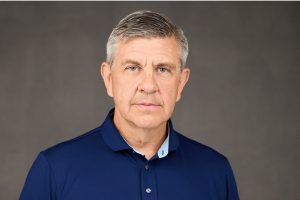 Andrew CavenaghChairman & CEOParetoHealth
 Andrew ClaytonVice ChairmanParetoHealth
Andrew CavenaghChairman & CEOParetoHealthAndrew ClaytonVice ChairmanParetoHealthEpisodes
Subscribe to the only insurance podcast that takes no prisoners
