



Season 1Episode 341
Episode 3: Lasers, the human C-3PO, and rising lobotomy prices w/Billy Potter of Snellings Walters
Episode details:
We’re talking lasers, but not the “pew-pew” kind. This is our conversation on stop-loss lasers and how they’re calculated. Lasers are among the most pressing concerns for employers, so we break down the details. Then we’re joined by Billy Potter, CEO of Snellings Walters, to talk about his journey into insurance, how business culture eats strategy for breakfast, and how to get the right people into the right roles. It also includes some psychological truths about your brave and beloved hosts, so listener discretion is advised. In our “You know they’re a knucklehead when…” segment, we talk about a particular piece of knuckle-headedness that plagues the industry. Namely, the advice that someone should “always take the stop-loss laser.” It’s a little bit like telling someone that they should “always cross the street.” Depending on the street, you might end up facing a bigger problem than what you started with.
Topics covered:
- The definition and mechanics of "lasers" (specific deductibles) in stop-loss policies
- An interview with Billy Potter from Snellings Walters
- The "knucklehead" argument that employers should always accept lasers
Episode transcript
Andrew Cavenagh (00:08):
Welcome to 80 20 with Pareto Health. I’m Andrew Cavenagh.
Andrew Clayton (00:11):
And I’m Andrew Clayton. Thanks for joining us for today’s episode. Today we’re going to follow our three-part series. We are going to first talk about lasers, how they’re used in the marketplace or avoided in the marketplace relative to large claim protection. Second is interview. Our guest today, our guest is the heralded Billy Potter, CEO of Snellings Walters, make sure we emphasize CEO. And third is we’re going to have a little fun with our segment called they’re Knucklehead win. And that’s where we poke fun of industry practices that don’t make a whole lot of sense.
Andrew Cavenagh (00:51):
So today we’re talking a little bit about laser, that thing that scares everybody about self-insurance, sort of the Kaiser, so a o self insurance, which is, oh no, there might be a laser. So Clayton, in layman’s terms, walk me through a laser if you would.
Andrew Clayton (01:03):
A laser short and sweet is a donut hole in your risk protection. And so as a self-insured employer, you buy stop-loss protection to cover claims above a certain threshold. That threshold is the employer’s deductible. So the amount of risk they’re going to take on, and we’ll just keep that at a hundred thousand dollars. That a hundred thousand dollars deductible is technically referred to as a specific deductible. And so what happens is the employer says, I’ll take all responsibility for everything under a hundred, and then I want to buy insurance for an insurance company to pay all claims above a hundred. What happens at renewal is that the stop-loss carrier has the ability to look at the population, their claims experience and say, we’re going to continue to cover everyone at a hundred thousand dollars except for Andrew Capital. He is an absolute train wreck. The lobotomy didn’t work.
(01:52):
We’re going to have to go in and do a second one, and we know he is going to have a half million dollar claims this coming year, so we’ll cover everyone at a hundred. Except for Kavanaugh, we know it’s going to be 500 grand or predict or expect it’s going to be 500 grand. And so he’s going to have an individual deductible of 500 grand. And so that $500,000 or the delta between the 100 normal deductible and the 500 is a laser. And laser really means individual or silo deductible based on an individual’s projected risk or projected claims.
Andrew Cavenagh (02:24):
And I think donut hole actually helps if someone understand a little bit better than laser. But I guess the concept with the word laser is that we’re lasering one person off the plan, like laser focused in your hypothetical, my brain is too much capacity for this world. And so we needed a lobotomy to bring it back down to normal person level, and that’s going to cost half a million.
Andrew Clayton (02:44):
Your parents did a great job building your self-confidence.
Andrew Cavenagh (02:47):
Yep. So let’s take the hypothetical lobotomy. We know it’s going to cost 500 grand. We know when I’m going to have it, we know where I’m going to have it, and that’s really the argument for the laser, right? The stop-loss carrier could sell the employer coverage for me, but how much is the stop-loss carrier going to charge? They know I’m going to be 500 grand ground up.
Andrew Clayton (03:05):
They’re going to charge you an additional $400,000 for the risk position between a hundred thousand and 500 plus. They’re going to add expenses on top of that. And they’re also probably going to add a little bit of a buffer claims layer too, which is if it runs over 500,000, so the total delta for $500,000 of claims, they’re going to probably charge you 500 to 550 all in.
Andrew Cavenagh (03:28):
And so that’s why most employers opt for the laser. If you get to that point, the choice is have the higher deductible for me capped at 500,000 or increased my premium by over 500,000 and remember that I still have to pay that first a hundred. And so just sort of makes sense from the employer’s perspective. Also makes sense from the stop-loss carriers perspective. So it’s what we would think of as rational at that point. The way it’s often described is that you can’t really buy insurance for a building that’s already on fire, or if you can buy it, it’s going to be the cost of the building, plus probably the cost of cleaning up the fire. So that’s the idea of a laser. This assumes that we got to the point where I don’t have a policy that covers lasers. So talk me through that a little bit.
Andrew Clayton (04:12):
Sure. So you can buy a no new laser policy in the market. They are not readily available, but they’re available with certain carriers and certain consultant brokerage relationships with those carriers. And what that means is that oftentimes it’s structured in a one year renewable coverage where if Kavanaugh Industries becomes a client of Clayton stop-loss carrier for the first year, we will issue a no new laser policy, which means at renewal you have the guarantee that we will keep everyone at the a hundred thousand dollars threshold. Now there’s an extra premium that you pay for that obviously to avoid what we just walked through, the extra 500, $550,000 in premium charge and the way that the stop-loss carrier pays, you have to pay an extra premium for that coverage. But they also say we want to be able to adjust our rates up to a certain threshold too if we find ourselves that we have to ensure a burning building.
(05:15):
And so that comes with what is referred to as a rate cap because the employer wants to know that you’re not going to just simply increase my premium by 550 grand. There’s no point in having a no new laser if it just means I’m paying it in fixed cost. Those rate caps oftentimes are in the 45 on the low end, 45% increase to premium, and we’ve seen them ranging up to 75 or a hundred percent. Sometimes people do throw the ridiculous gimmick in, I’ll give you a no new laser, but we can change your premium to whatever we want, which is obviously the same or worse than just having a laser.
Andrew Cavenagh (05:50):
So let’s just put a numerical example there because you had a lot of words, and while I actually thought the words were accurate, sometimes it’s easier to follow with numbers. My stop-loss premium is $250,000. And I say, okay, I want to know new laser policy with, let’s call it a 50% rate cap. So they might charge me an extra 10%, so my two 50 is going to go to 2 75. I go through the year, and if I have that lobotomy claim that we were just joking about, they actually can’t give me that laser. But what they could do is increase my premium by 50%, and so whatever half of 2 75 is would be my next year’s premium.
Andrew Clayton (06:23):
So somebody without a lobotomy would’ve picked an easier number to have. But yes, go ahead. That’s correct.
Andrew Cavenagh (06:29):
So I have my new premium that’s 2 75 times 1.5. See, I’m just going to, I’m speak in equations instead of
Andrew Clayton (06:36):
A hundred thirty five, a hundred thirty seven five. But yeah, go for it.
Andrew Cavenagh (06:39):
Now, add that
Andrew Clayton (06:41):
It’s bigger.
Andrew Cavenagh (06:42):
Yeah, by 50%.
Andrew Clayton (06:43):
Yes.
Andrew Cavenagh (06:44):
So that’s what I opted to do. So I pay a little bit more. I buy more insurance, I eliminate the lasers, but as you said at the second renewal, my third policy year with this carrier, they can take that away. And so for the lobotomy claim, it probably doesn’t matter, but for something like a dialysis claim or a hemophiliac that’s ongoing, that laser protection would be removed after the first renewal.
Andrew Clayton (07:06):
Correct. You go from no new laser protection to no bueno that you’re out there and you can have donut hole not only on your lobotomy or your dialysis or your hemophiliac, but then the no new laser is pulled on. Everybody else in your population in whatever burning or smoldering building you have is out there fully exposed.
Andrew Cavenagh (07:26):
Great. So let’s just summarize real quickly for the audience. A laser, a donor hole normally tied to a specific person, hence the word laser. That reduces coverage. If you’re at the point where you’re choosing laser, no laser, it is often a good idea from both the employer and the stop-loss carriers standpoint to apply the laser, but not always, and we’ll talk about that a little bit more in a future segment. But one of the keys is that if you are worried about a laser or the exposure that laser creates, you can do things such as buying a no new laser policy or joining a captive in certain cases to not ever be in that position to avoid ever having to think about whether you want a laser or not. We are pleased to welcome to 80 20 with Pareto Health today, one of our favorite people in the industry, the one and only BP, Billy Potter, CEO of Snellings Walters. Billy, welcome to the program.
Billy Potter (08:21):
Thank you for the invitation.
Andrew Cavenagh (08:24):
I’m going to start with one of our favorite questions, which is how you got into the industry, and I really want to know it from two perspectives. One is just how you got into insurance in general, but then I actually wanted to focus a little bit more time on when you transitioned away from the carrier side into the consultant side.
Billy Potter (08:41):
I found out that University of Georgia had a career fair, and I asked my friend for his ID because I didn’t go to school there and I went to the Georgia career fair, but found out which companies were going to be there and I didn’t really care what industry was. I just wanted to see what kind of investment they were making into their new employees. And Sun Life Financial was at the top of the list, and candidly, when they found out in the interview that I didn’t go to school at Georgia, he had me call as regional vice president immediately, and they kind of put me on the fast track and it was great. I had a wonderful career there for a decade. In the end, it was more of a means to an end. I was working there for the money and raising a family and having kids. That wasn’t fulfilling enough. In fact, it was keeping me from becoming the man I wanted to be when I grew up. I knew that on the carrier side, you go one of four ways. You leave the industry altogether, you stay a salesperson forever, you go into middle management, which I promise you, that was not going to be my destiny. Or you go
Andrew Cavenagh (09:47):
Clayton’s a middle manager, right?
Billy Potter (09:48):
Yeah, I know.
Andrew Cavenagh (09:50):
Aspiring.
Billy Potter (09:51):
Yep. He doesn’t know or become you. Flip to the brokerage side. I was attracted to that immediately and really just interviewed with a handful of firms in Atlanta. In the end, I interviewed with a lot to begin with, but in the end I was only considering a couple.
Andrew Cavenagh (10:07):
And walk us through that. I know you’ve told me the story before, but I love hearing the story. Why Snellings was the home for you, how you came to that realization, et cetera.
Billy Potter (10:17):
Yeah. My last five or six years on the carrier side, I only worked with five firms, digital insurance, j Smith, Lanier, Alliant Insurance, and maybe one or two small other ones. And really most of my business came from Alliant and Digital. And so I was interviewing with Alliant and then Snellings Walters. When I was invited to come interview with Snellings Walters, I really had no desire to go to work there. I knew the family and I thought very highly of the family. I went to school with Tyler Snellings, who was the grandson of the founder, and it was a startup opportunity. I mean, they had no benefit shop really to speak of.
(11:01):
And when I was playing golf with the CFO of Alliant, he said, tell me where you’re at because it sounds like you’re in between us and a family owned insurance agency. I said, yeah, it’s two completely different opportunities. You guys insure Macy’s, and I think there’d be an abundant amount of resources and a wealth of knowledge for me to learn from. And then this is more of an entrepreneurial opportunity. And what he said next was one of two big moments in giving me clarity. He said, I remember when Alliant was a small regional, family owned insurance agency in California. And I was like, wow, that’s what I want to do. I want to build something great. And then the second one came in my third interview at Snellings Walters. They said, how’s your interviewing process going? I’m like, it’s amazing. These people are ready to give me a lot of stuff and I just feel very desired
Andrew Cavenagh (11:59):
First time for everything.
Billy Potter (12:01):
I’ve never felt that before in my life. And so they said, what about with us? How’s it going? I said, it’s a little depressing. And they’re like, why would you say depressing? I said, because every time we’re here, we’re talking about my character defects and long meetings. It was long and a lot of Kleenex. And so they said, would you like to know why? And I said, I’d love to. And they said, well, if you can become this successful with your character defects, what we want to know is who you can become without them. I didn’t really believe a lot of the things they were telling me about the company they wanted to build and the environment they wanted to create. But I’ll tell you, it was a stark contrast with everybody else I interviewed with because their focus was on my development, not what I can give them. Which let’s be honest, dude, I was giving them debt. I had no book of business to bring. So yeah, it was a wonderful experience.
Andrew Cavenagh (12:57):
Just so that people don’t think the wrong thing of you when you talk about character defects, you don’t really mean character defects in the way that most people do, flat spots, weaknesses. Just give an example of one or two of the things that,
Billy Potter (13:10):
Yeah, so my emotional response to circumstances, Clayton, you know what I’m talking about there
Andrew Clayton (13:15):
Just a little bit.
Billy Potter (13:17):
Emotion, Andrew are things we feel C, that’s what we’re talking about when we say the word emotion.
Andrew Cavenagh (13:23):
Can you draw that your picture?
Billy Potter (13:24):
Sadness. Okay, all of these are emotions.
Andrew Cavenagh (13:27):
I’ve heard rumors of those.
Billy Potter (13:29):
You can’t always touch them, but you feel them on the inside. We talked about my shortcomings, what’s keeping me from developing into a more successful man? Not a successful person, but more successful man. And the reason we spend a lot of time on that, and we still do today, is not to make people feel bad about themselves, but the issues I bring to my sales prospect are more than likely the same issues I bring to my family. If we can get people to be shaped into becoming better at work, everybody wins, their family wins, our clients win. The prospects they meet win, their coworkers win. And Truet, Kathy said it best when Boston Market was taking some significant market share from Chick-fil-A, I think this was in the nineties, they had this huge board meeting and Truet Kathy slammed the table. Everyone’s talking about how they need to expand and truet, Kathy said, if you make them better, bigger is inevitable. And that’s what we’re trying to do. We’re trying to make people better.
Andrew Cavenagh (14:31):
That’s great.
Billy Potter (14:32):
And this is why I work with both of you. There’s ample opportunity to make you both
Andrew Cavenagh (14:36):
Huge upside,
Billy Potter (14:37):
Significantly better.
Andrew Cavenagh (14:38):
Raw clay, right?
Billy Potter (14:41):
I am your potter.
Andrew Cavenagh (14:42):
There you go. So you guys are big fans of personality profiles before people join. It’s one of the tools that you use to assess the flat spots or maybe the blind spots a person might have because of you. We’ve started doing the same thing. Not trying to turn this into an advertisement for Jason and Culture Index. There are other firms that do something similar, but just with that as sort of the backdrop, how do you use it? Where do you use it, what do you get out of it? How’s it changed the hiring process? And then maybe more importantly, the firm itself.
Billy Potter (15:12):
We could not be bigger fans of what they’re doing with that tool. And honestly, it’s a great compliment to EOS, which is a big component of our organization, just identifying the right people and making sure that they’re in the right seat, which I think a lot of productivity is lost in our workforce because people are misaligned, they’re good people, they’re not being aligned what they’re being asked to do. And from an interviewing perspective, that’s the first step they take. I don’t even want to talk to somebody unless they take the culture index. And to your point, Andrew, it’s not necessarily a right or wrong profile. There are some profiles that are more aligned for sales, so all that’s going to mean in the end is that you might not have to push them as much to go do their job. They’ll intrinsically want to do it, and that’s a good thing for everybody.
(16:06):
But what I want to look for with anybody that I’m interviewing is do they know who they are? And that’s a great component of the Culture Index is self-identification of your strengths and your weaknesses. It’s fascinating. We’ve used it for close to eight years I think. So it has gone beyond just the workplace. We test clients, we test prospects, we test spouses, their children to help parents better communicate with their kids or their spouse to help us realize how we need to service our client. I’ll give you a case in point. We have a fantastic client that’s actually in the captive that my client manager came to me and said, I want to be removed from this account. And we’re like, why? They’re like, this person hates me. And I’m like, that’s impossible. She is like a heart with arms. There’s no way she hates you.
(17:05):
And when we looked at her profile, she’s like the 99th percentile sense of urgency in the world. She’s been disappointed by everybody in her life by how long it takes them to get something. And so the perfectionist she was working with internalized the failure every time she asked, is this ready? Yet all that is a miscommunication. It’s telling the client the reasonable expectation for this is 10 days and then boom, done. But we don’t think about that kind of communication a lot. And so that tool, there’s not a component of our business. That tool hasn’t positively impacted
Andrew Clayton (17:48):
I think to your, there’s an aha moment that’s almost freeing when you analyze your profile, the folks around you, the mapping, the quilting, how you fit together. But we’ve been so conditioned to think that if you’re in this seat or have this responsibility, you have to be cut from this exact mold and fit into as opposed to these are the things that I am really good at, I’m really passionate about. These are the things that naturally are going to be a struggle for me. Why don’t we just shed or reallocate some of these things and let people flourish where they naturally want to be.
Andrew Cavenagh (18:24):
We can and maybe should spend an entire podcast talking about EOS. There’s so many great parts of it, and the people chapter is fantastic. I remember that when we first did the accountability chart, it was a game changer because Clayton and I in particular had so many things that we both thought we were responsible for and then a whole bunch of things that neither of us thought we were responsible for. And that just worked its way through the organization, which wasn’t huge at the time, but everyone sort of pointing at each other saying, that’s not my responsibility. And by assigning that huge difference in productivity, fewer arguments between us, et cetera, and then you keep going to right person, right seat. That analysis gets it wants, it has the capacity to do it. There’s so many parts of just that section in the book. Again, Clayton used the word freeing, but sort of force multipliers on the business.
Billy Potter (19:13):
You all upgraded with me when I heard this is the first, and I know there’s more, but this is the first core value that you identified that you communicate to me, that you identified through that process about Pareto where I was like, man, they did a great job. This is exactly what I see. This is exactly why I want to be affiliated with these gentlemen. Gentlemen’s a stretch. Yeah,
Andrew Cavenagh (19:39):
Use loosely.
Billy Potter (19:40):
We got it. Appreciate it. It’s fire in the belly. And I said, they ran a thorough process that is a phenomenal core value for what they’re building. And I just really felt like it’d be a good idea for our firm to hitch our wagon to you because you were running a process that’s rare, that deep dive, it takes a lot of time, money, and resources and I mean, look what you’ve come in just 10 years time. It’s incredible. It’s true. Culture does eat strategy for breakfast. It really is true. And all you have to do is look at fast food for that and see what Chick-fil-A’s has done compared to every other restaurant that has more means or more marketing exposure or whatever culture, eat strategy for breakfast. And both of those components, EOS and Culture Index are the best tools I’ve found in creating a healthy culture.
Andrew Cavenagh (20:31):
Before we move on, can you just give a quick synopsis for the listeners of who Clayton is from a culture index standpoint? I’d love to hear your analysis of who he is.
Billy Potter (20:42):
He’s at a glass caged of emotion. He is the quintessential slayer of sales profiles. If memory serves me correctly, he’s a rainmaker. Is that correct?
Andrew Clayton (20:54):
That’s correct, yeah.
Billy Potter (20:55):
Rainmaker is absolutely the best relational salesperson you’ll find in the world. He has got crazy good emotional intelligence. He’s a great read of others, but his B is so high, he’s constantly reading his audience and saying, how much do they love me? Not enough. Typically more, more. And he is low logic, just like me. He feels first, second, third, and then he thinks, and it’s usually a blackout. So for me, when emotions are high, intelligent decision making is low and unfortunately time cures that it just takes a long time to realize that we can’t respond or react to certain circumstances the way that we want to because we feel so strongly about them. One thing that’s unique about Clayton is that when you share an experience with him, he hears what you’re saying, but he can identify what he felt when he experienced the same circumstance in his life. And because of that ability, he has this uncanny way of establishing trust really quickly with others because he can connect how the two feel without it really being shared. Which is kind of amazing that you guys are so close because Cav, you’re incapable of communicating in emotion and you don’t have to because Clayton has it for you.
Andrew Clayton (22:29):
I trust that part of that trust is I trust you to now walk through Kavanaugh’s profile.
Billy Potter (22:35):
Yeah. So
Andrew Cavenagh (22:37):
We’re running out of time
Billy Potter (22:38):
On that. Well, alright, fine. Then I have two films that we could watch to understand the both of you. Clayton’s Captain Kirk Kavanaugh’s Spock or Clayton’s Han Solo and UR C3 po Cav. There’s a guy in my office that is similar to your profile cv and he said something very complimentary to our board on a text message chain and somebody on the board hearted what he said, and his response went back was No hearts,
Andrew Cavenagh (23:08):
Please. The only thing thing that I regret about this conversation or the main thing I regret is that Clayton’s wife isn’t on here for this is the truth, right? No listening. I would like to have Michelle on here so she could hear you describe her husband because I think she might point of order here.
Andrew Clayton (23:28):
You said we ask spouse or encourage spouse to do the culture index. We do too, but we’ve made the mistake of doing it at cocktail parties later in the evening. Not always the best moment or moment in time.
Billy Potter (23:41):
I cannot tell you how many accolades we’ve gotten from spouses with their appreciation. I mean, one of them said, I wish we found you four years ago. And I was like, why? They said, you would’ve saved us about 15 grand in psychology bells. I was like, oh my God.
Andrew Clayton (23:58):
So when my wife and I fight and somebody drops the ball on something she will immediately go to. That’s your low attention to detail. Just ask Kavanaugh.
Billy Potter (24:08):
Well, here’s what I would say. She’s actually incorrect with saying that it’s not that you have a low attention to detail, it’s that you have no attention to detail, but it’s not like Cav does. So
Andrew Clayton (24:25):
You spent a decade calling on brokers and as you said, when you moved to the Snellings, they made an investment in you. You came without a book of business, but you got to see what a bunch of, I’m sure quality folks were doing. What were some of the things that you said, I want to emulate that that’s I’m going to operate and I want to be the professional that you are today.
Billy Potter (24:47):
So Bob Reynolds, he may have retired by now, but he was the 11th employee at McGriff, Siebels and Williams. So this is before bb t came in with McGriffs World and he’s just a class act man. I’ll never forget him sharing with me that he sold a 60% increase on a disability on a long-term disability policy. The premium on the account was $10 million. So he sold the $6 million increase to the client. And when he explained why he walked the client through why this is a good deal for the organization and what are the long-term effects with shopping this business because it was very credible. So he wasn’t intimidated by the price, he was focused on the conversation. That kind of thoroughness bridges the gaps of miscommunication. And he was depending on the day, I mean he would be a staunch advocate for the client and then he’d also be a staunch advocate for the insurance companies that he’s representing. Bob Reynolds made you feel like a partner. He’d buy me lunch when I would come and visit him in Birmingham, Alabama. And I just thought, you know what? The kind of relationships he has with his clients, there’s a stark contrast with what he’s doing. And then what 80% of the brokers I call on are doing
Andrew Cavenagh (26:20):
Love hearing that story. So that’s a great example of something that you see in the marketplace from your peers that you want to emulate. And on this podcast, we’re doing a segment each time, which is they’re a knucklehead when so would love a nugget or two from bp. How do you know when someone out there is a knucklehead? We don’t have to use names, but just curious.
Andrew Clayton (26:42):
You can use names if you want. Don’t let us hold you back.
Billy Potter (26:44):
I almost don’t believe it when a prospect tells us that their current agent tells them that they’re too small to self-fund. I almost don’t believe that exists. I’m like, they’re making that up. There’s no way. So that is a surefire way, in my opinion, of being a knucklehead is making a gross assumption based on the size of the organization that you can, or I think the knuckleheads have one real issue and that’s telling rather than asking, because it’s mostly relational. It’s not asking questions that are having them think critically about their business and about their part in the issue that needs to be addressed in the company.
Andrew Cavenagh (27:30):
Favorite question that you like to start with or ask? Just sort of open-ended to get a dialogue going that you’re willing to share. Again, in theory, someone might be listening to this and ask the same question, not that it’s going to matter,
Billy Potter (27:39):
But one of my most favorite questions to ask is, we’ll pretend that Clayton’s the incumbent, the project was telling us we’ve been disappointed the last three years. We’ve asked for this, they’ve ignored it, blah, blah, blah, blah, blah. And so we’re ready to make a move. And I just love asking, if Clayton were here right now, would he know that you’re ready to make a move? Have you communicated that to him? And a lot of times they’re like, what? And a lot of the times you’ll hear a lot of key words that tell you no. He doesn’t know like, well, he should or I think he should, or I believe so. Well, we’ve clearly communicated in the past. And so bluntly, I say, it doesn’t necessarily sound like you have great confidence that Clayton knows and based on the relationship you’ve had with him, I think it’s fair for him to know.
(28:32):
Wouldn’t you agree? And the reason we do that is twofold. Honestly. We want to push ’em back to the incumbent. Can you salvage the relationship if you can? I think everybody wins. That’s first and foremost why we do it. Doing unto others as you would have done unto you, because I’m going to disappoint this guy someday. I know I will. And that’s okay. It’s just not okay for me to not know about it. What’s not okay. And now the agent’s fault is not asking enough questions. And then the second component of that is I want to know in that moment, am I inheriting this issue where they’re poor communicators when they’re wronged? That’s why I want to know that. I’ll tell you it’s uncomfortable and I don’t mind entering the quote danger, but it’s uncomfortable for me to ask. I’ll never forget, there’s a client that I asked one day, Hey, where have I failed you? Where have I let you down? How could I be better? My agency success depends on your feedback right now. She handed me nine pages of notes. I was rocked so thorough about all the missteps over, dude, it’s been like eight months that we were together and it rocked my
Andrew Clayton (29:54):
World. We can edit this part out.
Billy Potter (29:56):
And she is, she’d put a bronze statue of us in her company today. We heard her and we responded to the feedback. And that’s the thing about relationships is that the healthier the relationship, the more healthy conflict you’ll have. And that’s the true sign of a true relationship is that they’re not afraid to share. You have broccoli in your teeth, dude. Get it out.
Andrew Clayton (30:27):
As you think about the industry, what’s the one thing that keeps you up at night?
Billy Potter (30:34):
The consolidation bothers me. Not so much on the insurance agent side that continues to happen with the networks. It’s just becoming more monopolistic. And I don’t like that the networks are controlling a lot of our ability to self-fund. They’re almost trying to make self-funding more of a fully insured product. Does that make sense?
Andrew Clayton (30:55):
Sure.
Billy Potter (30:56):
More controlled. I think the autonomy of putting the decision in the employer’s hands to make their own decisions is part of the beauty of self-funding. It’s kind of like saying the difference between building a home and then choosing between one of three homes that you can ask your builder to make. It’s just not the same
Andrew Clayton (31:15):
If fewer checks and balances. Let’s take the flip side of that. What’s one thing that you’re really excited about over the next five years or one thing you think the industry is going to graduate to? That’s going to be a really positive change.
Billy Potter (31:30):
Not to toot your own horns, but y’all have broke the mold on what’s been needed badly in this small to mid market, depending on how you defined it, space for health insurance. I just hope that the caliber of consultant that represents your product can keep pace,
Andrew Cavenagh (31:47):
Unlikely. They’re keeping pace with you. Bp, you are an outlier and I truly mean that. I remember the time that I met you in person for the first time, came to your office and it was a unique meaning for me. A, I was out trying to sell. And we know that’s not always a good idea. And B, I think you gave me five books to read. But I think the thing that I walked away from there, and I know you and I have spoken about this thinking where we are kindred spirits, even if our personality profiles are so different, is that we weren’t interested in talking about two or three accounts. We want to talk about a hundred accounts.
Billy Potter (32:21):
It’s just been such a phenomenal investment for our firm. So I’m grateful for both of you for what you’ve done.
Andrew Cavenagh (32:27):
I might, those are emotions. Those are emotions. What that is, don’t shy,
Andrew Clayton (32:32):
Shy away. We don’t want C3 po to get rusty.
Andrew Cavenagh (32:38):
So Billy, you were at a cocktail party and someone walks up to you and says, what do you do? How do you answer that question?
Billy Potter (32:45):
I have four children that I’m raising. That’s the first thing that I say many times. I don’t even say that I’m in an insurance. I just talk about the fulfillment I have in my work. What I like about that is to see where the conversation’s going. Do they actually want to know why I do what I do or do they just want to know what I do so they can move on? If the conversation’s just kind of flat, I tell ’em I own an insurance agency and then we move on. But if the conversation’s something more, I tell them that I work for a firm, what it’s done for me and helping become the man I’ve always meant to be.
Andrew Cavenagh (33:29):
And now for the last segment of our episode before, because this is the place where Clayton or I, but typically Clayton put our foot in our mouth, so get ready for, they’re a knucklehead win. So this week’s one, really straightforward. I saw someone write something in one of the, and I think it’s a LinkedIn post about the only social media I read or that will have me. And it said, it is always a good idea for the employer to take the laser. I’m just going to tell you, we’ll explain why in a second. But if someone tells you it is always a good idea to take lasers, they’re a knucklehead. Clayton, tell me why that is.
Andrew Clayton (34:06):
That is basically the same thing as saying, I will always take all uncapped liability and risk now and in the future. And from a risk perspective, you look at it and say, okay, if it’s something really small, quantifiable and you know that it’s going to be a likely predictable outcome from a risk perspective or from a healthcare perspective cost basis, then it probably does make sense because you’re simply just overpaying in expenses as opposed to paying that claim direct. But for something that has a lot of volatility, potential exposure, could have complications, could have a multi-year cost basis to it. It is in all likely and better to be able to transfer that risk to somebody else. That’s why the insurance companies have the big balance sheets. That’s why health plans don’t have the big balance sheets that you don’t want that ongoing year to year risk and volatility.
Andrew Cavenagh (34:58):
Let’s use an example, and this is sort of real world. We see this all the time in our business where X, Y, Z manufacturing has an employee whose condition suggests that he or she might need an organ transplant at some point. And so organ transplant, let’s just use round numbers. Let’s pretend it’s $500,000 if you have it. And so the stop-loss carrier says, okay, X, Y, Z manufacturer, you didn’t show up with a no new laser policy. So I get to use these things called lasers. We have person A that’s showing that they might need an organ transplant sometime in the future and it might cost 500 grand. So I’m going to put a 500, maybe even a $600,000 laser on the policy. That’s the way the insurance judiciary thinks because if you’re setting the laser, you’re setting it at the maximum cost or the likely maximum cost for that procedure.
(35:43):
But here’s why the original statement is a knucklehead statement is that that assumes that they will have the organ transplant, that there’s a hundred percent chance they’re going to have that. And organ transplant’s a great example where it might happen this year and it might happen five years from now. And so if you said, okay, what’s the probability of an organ transplant and let’s just call that one in five or 20%, and if we do have it, it is $500,000. Well that means the expected value of that organ transplant next year is a hundred thousand dollars. And so if you went to the carrier and said, look, I’ll pay you 120 grand in premium and get rid of the laser, the carrier might take that all day long. They’re going to make a little bit of money. They’re in the business of taking risk. And as the employer, I’ve taken away the potential of getting kicked in the teeth with that $500,000 in one year over five years. Would it cost me a tiny bit more, but I’d have less volatility? I’d have more certainty. And you know what insurance is, Clayton? A couple more that I heard on the same string lasers are almost always set too high. Give me your thoughts on that.
Andrew Clayton (36:45):
No, this is a short version of it. As you walk through before, lasers are often set at what the likely expected outcome is going to be. Maybe there’s a small hedge or buffer in there, but there can be compounding factors. There could be other issues that occur within an individual. You could have a hemophiliac that’s lasered at a million dollars or 750 and it ends up being an extended hospital stay with ongoing tremendously costly treatments. And it’s two and a half, $3 million. Obviously in that scenario, the coverage above the laser picked up an extra $2 million of claims. So there certainly are scenarios where the laser was set at what was believed to be an appropriate amount. But just like anything in life, things can happen and the costs well exceed the laser threshold.
Andrew Cavenagh (37:37):
So I think we would agree that carriers tend to be conservative in how they set them because it’s heads, I lose tails eye tie, right? They’re not making any premium for it. And so we wouldn’t argue with that. But at the same time, the higher the laser, the less competitive their quote. And so carriers are not just sort of arbitrarily setting ridiculous amounts. And there’s a lot of science including artificial intelligence and machine learning going into these things these days to try to come up with the right amount. So the idea that they’re sort of arbitrarily or maybe intentionally twice what they should be, I just don’t buy it. And then the last one that was part of the same string, which really made me chuckle, the comment was that not only should you take the laser for the reason we talked about earlier, but it’s actually better for the employer’s financials because with the laser, you don’t have to pay any money and you’re not required to post a reserve.
(38:25):
And so your financial statements, your income statement and your balance sheet will look better. And that’s a knucklehead definition right there because at the end of the, you’re either paying the insurance premium or you’re paying the claim, and the fact that your financials don’t reflect it for some amount of time, even though it’s still either going to happen or not happen, isn’t a good thing. And to defy you to find a CFO or an owner of a company that wants to inflate their financials, essentially inaccurately for some short amount of time for a claim that’s about to hit. And in fact it’s the opposite, that they would want to expense it as soon as possible, A reduces taxable income. And B, most people want their financial statements to be conservative as opposed to aggressive. So Clayton, I know you’re trying to interrupt me there, but go ahead.
Andrew Clayton (39:10):
No, I would just add to that, you’re exactly right. The additional factor I would comment is that they’re doing all of that. They’re trying to fool around with their financials to make them look better for a very limited period of time while increasing their exposure tremendously. So the trade-off isn’t worth it short time, and it’s certainly not worth it in the long run because they could be faced lasers that are going to have a much more material impact on financial statements.
Andrew Cavenagh (39:36):
So lasers, again, we’re not saying they’re good or bad. They have their place. What we’re telling you though is if someone tells you you should always take a laser, they’re a knucklehead. If someone’s telling you that a laser is better for their financial statements, they’re a knucklehead. And then the last thing is that the person that you’re talking to might be a knucklehead if you’re having a conversation about lasers to begin with because there are no laser policies, some for a year, some in perpetuity and things like benefit captives. And so it’s possible that the person is such a knucklehead that they didn’t put you in the position to not have to consider whether or not you want a laser. They didn’t give you the opportunity just to take those completely off the table, and therefore, you’re now making decisions around what level of extreme volatility you want as opposed to having bought the right product from the start and not be faced with that decision.
Speaker 4 (40:30):
Thanks for listening to today’s episode of 80 20 with Pareto Health. We love hearing from you. If you have a question or an episode suggestion, please drop us an email at 80 twenty@paretohealth.com. That’s eight020@paretohealth.com. Dive deeper into 80 20 by visiting us at pareto health.com/podcast. Lastly, make sure you follow us on Apple Podcasts, Google Podcasts or Spotify so you don’t miss an episode.
Guests
Billy PotterCEO,Snellings Walters
About the show
80/20 with ParetoHealth is a take-no-prisoners journey into the heart of health insurance co-hosted by two of its major disrupters. The Andrews (Cavenagh and Clayton of ParetoHealth) give you fresh insights and perspectives. Join them in their conversations with guests who are also transforming an antiquated industry and reshaping the way employers select and implement healthcare benefits.
Hosts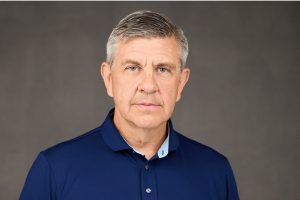 Andrew CavenaghChairman & CEOParetoHealth
 Andrew ClaytonVice ChairmanParetoHealth
Andrew CavenaghChairman & CEOParetoHealthAndrew ClaytonVice ChairmanParetoHealthEpisodes
Subscribe to the only insurance podcast that takes no prisoners
