


Season 1Episode 930 Minutes
Episode 9: Leeches, Medical Inflation, and Insurance Tinder w/Brian Olsen
Episode details:
In this episode, we go over the phenomenon of medical inflation and what parts of the COVID-19 pandemic have contributed to rising medical costs – as well as what self-insured employers can do about it.
Then we chat with Brian Olsen of Sterling Seacrest Pritchard (SSP) to talk about his deep, committed relationship with self-funding and why that means we need a dating site for SIIA members. He shares one great insight about the often-misunderstood relationship between high claims and self-funded plans that you won’t want to miss.
Finally, we discuss one knucklehead move that too many brokers use in a feeble attempt to contain costs. It’s the epitome of short-term thinking. Is your broker guilty of this particular howler?
Topics covered:
- The impact of medical inflation on healthcare costs, driven by advancements in care, wage pressure, and provider consolidation
- An interview with Brian Olsen from Sterling Seacrest Pritchard
- The "knucklehead" broker strategy of reacting to high renewals by simply reducing benefits or changing carriers instead of addressing root causes
Episode transcript
Andrew Cavenagh (00:08):
Welcome to 80-20 with Pareto Health. I’m Andrew Cavenagh. And I’m Andrew Clayton. On each of our podcasts, we like to do a couple different segments that are repetitive. One of the ones we always try to do is knowledge. And the idea behind that is that we will share with you our audience one or two things that we think are worth knowing. And today’s knowledge segment is about medical inflation. A couple of segments ago we talked about leverage trend. The idea of leverage trend is that whatever medical inflation is, leverage trend is the phenomenon where stop-loss rates go up faster just because the catastrophic portion of claims goes up faster than overall medical inflation. We’re now going to rewind a little bit and just spend maybe five minutes talking about medical inflation, what drives it, and what’s sort of new in that area today. Clayton, start us off. When we talk about medical inflation, what do you think of? What are the things that drive it?
Andrew Clayton (01:02):
So a couple of things. One is that there are incredible advancements in care, right? The treatments that we used 50 years ago, 20 years ago, 10 years ago, we’ve made a lot of great strides with that.
Andrew Cavenagh (01:17):
Leeches are not very expensive, but they’re just not very useful.
Andrew Clayton (01:20):
Correct? Well, yeah, they heal the mind in terms of, wow, demons be gone. But outside of the psychosomatic cures, no, you’re exactly right. And there’s some things where we’re doing the same old way, but there have been so many changes. The research development component of it, we can’t talk about research and development. We can’t talk about advancements without talking about some element of commercialization and profits and p and l and the companies that are involved in that. But at the core advancements in care, the other part that goes into it is just general inflation in the sense of building new hospitals and building or the paying wages for doctors, physicians, transportation and medicine, all that stuff goes up as well.
Andrew Cavenagh (02:08):
Let’s double click on that one a little bit because I think that, well, that’s always been there, right? There’s CPI, sort of pressure on wages, construction costs go up, and that’s been true for the last however many years since we’ve been tracking that as a country. But the pandemic has changed that math a little bit over the last three years, and some of these things are a bit more acute. So if we think about a hospital, I think something like 50 to 60% of the overall costs are wages. Anything about what’s happened in wages for nurses, just that subset of the staff alone over the last two years, it’s up 50%, 70% just astronomical. And just with that increase that’s going to rear its head, not just at the hospital’s bottom line, but it’s going to rear its head in the form of the cost that the hospitals get reimbursed for by health plans. Whether that’s fully insured, self-insured, doesn’t really matter.
Andrew Clayton (02:56):
Absolutely. And you talk about nurses movement towards traveling, nurses, the popularity, but as you said, the cost basis of that, that’s two three x just based on demand and shortages. There’s one thing I didn’t mention in the advancements is that there absolutely is also a drag along part of that where if the pill to cure X, whatever it is, doesn’t matter, has gone up tremendously. You also see the cost of delivering an aspirin and other things that are relatively rudimentary have increased dramatically as overall prices have gone up. The cost of a use of a Q-tip, a swab, et cetera, if you’re in the hospital, the $90 pillow, all of that contributes to it.
Andrew Cavenagh (03:38):
So medical inflation, other things that have driven it, consolidation of providers, particularly hospitals, right? There’s always the argument that by hospital A emerging with hospital B, we’re going to get more efficient, we’re going to have better data. But the studies don’t really show that. I think it was the Robert Wood Johnson Foundation a couple of years ago that looked at consolidation amongst hospitals, and the more concentrated they were, the higher the prices were not the opposite. So another thing that’s driving medical inflation is obviously on the provider side. And then maybe the last one just to share with the audience is on the drug side, great new innovations you’ve got, and they’re not really drugs necessarily, but you’ve got gene therapy coming out where more and more dollars are going to go to gene therapies. And again, fantastic potentially lifesaving tools, but ridiculously expensive, millions of dollars in some cases. And so again, as those costs go up, the overall cost of medical care is going to go up. And that’s obviously what makes up our phrase of medical inflation.
Andrew Clayton (04:36):
I’m not sure if it’s intended or unintended consequences, but you think about brand versus generic and the duration of patent protection and how long people have without relative or direct competition. Obviously they’re spending a lot in RD and development and they’re going through the trial and error process and getting FDA approval. All of that is true, but it means that their window for recouping costs as well as accelerating profit margins is relatively small. And so the price point on the new innovations is incredibly high and inflated as a result of that, as opposed to a smoother effect. And so when you’re seeing all these advancements happen in a short period of time, it’s at an inflated accelerated rate. Not arguing, overly arguing whether that’s right or wrong, but it’s a product of the way the system set up.
Andrew Cavenagh (05:26):
President Biden recently signed into law the Inflation Reduction Act, and within that is the ability for Congress to negotiate drug prices for I think first 10 and then maybe 20 drugs down the road. I think it begins something like 2025 on behalf of Medicare. And I’m fascinated to see how that plays out. It’s obviously going to take some time to see what impact it is, but one of my worries is that we just squeeze the balloon that the drug manufacturers need to take in a hundred units of revenue, and if it means that they were getting 40 from Medicare before, now they can only get 30 from Medicare, that the 60 that the commercial plans were paying is going from 60 to 70. So that’s something to keep an eye on.
(06:08):
I think in a macro sense, just leaving this topic, and before we get to our guest today is medical inflation has sort of kicked along at seven to 8%. It was a little bit lower at the beginning of COVID, but we actually expect it to kick back up a little bit for some of the reasons that we’re talking about that you’ve got wage pressure on providers who have new drugs, new therapies, and continued provider consolidation. I think it’s anybody’s guess and sort of how much and when, but that’s something that from our position at Pareto, we spend a lot of time trying to read the tea leaves to figure out how that’s going to impact employers and obviously just behooves them to do everything they can to control the overall cost. Because if you can just reduce your cost, then obviously the impact of inflation is going to be somewhat mitigated,
Andrew Clayton (06:50):
Plus paying for what you use and not what the average individual uses. So today’s interview segment, we have a special guest, Brian Olson from Sterling Seacrest Pritchard in Atlanta. Brian, how you doing?
Brian Olsen (07:11):
I’m doing great, and I’m actually in Savannah today. You guys are catching me on vacation, and I decided to come to our Savannah office.
Andrew Cavenagh (07:18):
There’s no better way to spend vacation than doing a podcast about insurance, right?
Brian Olsen (07:24):
Most people would say no, but that is actually probably one of my highlights of the trip thus far.
Andrew Clayton (07:30):
So you are on vacation, but you’re in the office. Please tell me you’re not in the office for anything other than this. Are you that much of a geek?
Brian Olsen (07:38):
We did just get a signed proposal for another Pareto group, so that was one exciting thing that we did
Andrew Clayton (07:44):
That’s allowed, that’s an exception.
Andrew Cavenagh (07:45):
I think Expedia is going to add a new button. You know how you can do hotels, flights combo and just add insurance podcast on there?
Brian Olsen (07:53):
Sign me up for that membership when it becomes available. Please.
Andrew Clayton (07:56):
We have the pleasure of knowing you well, but for the audience, give us a little bit of your background, if you would please.
Brian Olsen (08:03):
Sure. Like you said at Sterling Seacrest Pritchard or SSP for short have been in the industry for a whopping five years, but have loved every second of it. And I will just say kind of a basic intro. The best way to get to know me is I’m in a deep committed relationship with self-funded insurance. That is how I open up all of my prospect meetings, client meetings.
Andrew Clayton (08:29):
How does that work for you.
Brian Olsen (08:30):
Easiest way to get it.
Andrew Clayton (08:31):
How does that work for your other relationship endeavors? That’s got to be a great opening line. Yeah,
Brian Olsen (08:36):
I am very single.
Andrew Cavenagh (08:39):
Well, let’s stay on this thread. Let’s go to, you’re at a cocktail party and somebody, male or female walks up to you and says, Hey, Brian, what do you do? How do you answer that question?
Brian Olsen (08:49):
Oh, I say that I’m a deep committed relationship with self-funded insurance. So you spend a lot of time alone at parties, right? Yes. Yeah. Or mostly it’s like me getting amped up about educating somebody like what is self-funding? And then I’ll just dive into it. A couple of drinks later. They’ve probably walked off by that point.
Andrew Clayton (09:08):
And speaking of being single, you actually majored in risk management, right?
Brian Olsen (09:14):
Risk management and insurance, and then a minor in actuarial science.
Andrew Clayton (09:19):
Oh my. Well, I’m impressed that you’re able to have this conversation. You’ve grown tremendously, obviously.
Andrew Cavenagh (09:25):
I think we’re spending our time in the wrong area. How they have there is, I’ll get all these things wrong, but the online dating tools for specific subsets, right? There’s the general one. There’s one I think for farmers. There’s one for people who are at the airport at the same time. We need to create the,
Andrew Clayton (09:43):
Which one’s that?
Andrew Cavenagh (09:44):
Yeah, exactly.
Brian Olsen (09:45):
Farmers only.
Andrew Cavenagh (09:47):
No, he’s not the airport
Andrew Clayton (09:47):
One. How do you know about such things
Brian Olsen (09:51):
I live in the southeast?
Andrew Cavenagh (09:53):
So we need one. He’s talking about me. We need one for the insurance industry. I think for people who majored in risk management in college.
Brian Olsen (09:59):
Have you ever heard of the Self-Insurance Institute of America? That’s essentially what we’re talking about here is SIIA is the dating pool for insurance folks, especially with the launch of the Future Leaders program a couple of years ago.
Andrew Clayton (10:13):
Speaking of acronyms or continuing our acronym, you have a whole bunch next to your name.
Brian Olsen (10:18):
Yep. That’s another indicator of my singleness. Funny enough, we were just talking about it.
Andrew Cavenagh (10:23):
Which one is the most useful? Let’s be serious for a second. Lots of different acronyms. Which one taught you the most?
Brian Olsen (10:30):
The certified Self-Funding Specialist or CSFS for short. Got it. Right after I did my CEBS or the C-E-B-S, the best way to dissect a plan, and especially from a foundational perspective, you understand what it is to market stop-loss, what A TPA does, all the different functions A TPA can do, how to do TPA RFP essentially a way to dissect every component of it down to the accounting function of self-funded insurance. Yeah, we were actually discussing this internally about the designations behind my name, that alphabet soup, as some of our partners like to refer to it, but it is the best way to go into a prospect meeting a client meeting. Understanding the ins and outs of every portion of a self-funded plan helps us answer a lot of the questions that they have about the nitty gritty day-to-day of self-funding.
Andrew Cavenagh (11:27):
Hang on a sec here. Are you telling me that as a consultant, being knowledgeable is helpful?
Brian Olsen (11:33):
Yes. Yeah, it’s crazy thought. Love it. Honestly, the biggest question that we get is how does my invoicing change? Because right now I pay one monthly invoice with insert carrier here. Is that the same way? And when you know a lot, you have to always caveat with, well, it depends. Are you level funded? Are you self-funded? What TPA are you with? Because each one has all these different functionalities about how they can essentially fund claims and stop-loss premiums and whatnot.
Andrew Cavenagh (12:08):
I find the whole, do I get one bill? Do I get five bills to be such a, I dunno if red herring is the right term, but such a misleading question in that it’s normally asked by people that aren’t actually paying the bills. And then when I look at a company, I mean, we’re not a big company, but we pay a hundred bills per month and they’re never the same. The rent check might be the only thing that we pay each month that’s actually the same. But payroll, utilities, they all vary by month. And it’s not as if, oh no, it’s a different amount. I can’t handle it. Or Oh, no, one more account I’ve got to pay. I just don’t understand how that makes the top a hundred of criteria for what insurance plan someone chooses.
Brian Olsen (12:50):
And I think it really depends on your tpa. A partner here is what kind of accounting function do you have internally? Because I think the biggest hangup we have is when groups want to cost allocate their claims and their admin and their stop-loss premium across the different departments. Some TPAs do it really well, some TPAs don’t do it as well. So all of those functions kind of need to go into how you determine what your TPA strategy is or your partner, because I mean, if you do it on the front end of implementation, Meritain will have every single check register with one little cell next to it saying, this claim was for this department. And if you pulled it from the said payroll system like a DP workforce, now Paylocity, all of those can be baked into it on the front end.
Andrew Cavenagh (13:36):
How’d you get into the business?
Brian Olsen (13:37):
So funny enough, I did not start out in a insurance related role. I started out in a technology consulting role, so acting like a broker for payroll systems saying, alright, you tell me your requirements and I’m going to go out to the ADPs Paylocity of the world and essentially get the best pricing and then help you implement. During an operational meeting that we had internally, they said that a partner’s going to be retiring here in a couple of years and we’re going to lose out on a lot of self-funded capital. I saw that as my in for moving into an insurance related role. That was my major back in college that night. I started the C SFFs course, realized it was way too over my head. I had no idea what ERISA was or new hire waiting periods. And then essentially moved my way back into getting the cs, which is kind of an overarching perspective of compliance and benefits, and then moved into the CSFS role. And when you’re a technology person with two benefits designations, it doesn’t really make sense to stay in technology,
Andrew Cavenagh (14:47):
The path that you laid out. So doing Steves first and then the self-funding is the route you would recommend to people.
Brian Olsen (14:55):
That is probably the best way to do it. It’s moving from one on, but if you’re somebody that’s in the industry that’s 20 plus years, you probably don’t need seeds as much, but if you’re looking to dive into self-funding, the CSFS is the way to go.
Andrew Clayton (15:10):
As a producer in health insurance space, healthcare space, you need a certain amount of interpersonal skills. You need a certain amount of grit and grind and you need some level of knowledge. We were joking earlier about a consultant actually having in depth knowledge. It seems like a novelty. You’re young, you’re aggressive, so you got the grind part of it, right? You got a big runway in front of you at ambitious goals. You’ve come a long way in the interpersonal skills, but you have enough knowledge where you could trade on the first two and the third and still not do the right thing by the client. What’s the factor? Or when was the aha moment that said, you know what I am going to take might be a slightly longer path, but I’m going to insist on doing the right thing because of the impact I want to have on the market or on my contribution.
Brian Olsen (16:09):
I think it came when we were in a prospect meeting and somebody had indicated there’s probably a million dollars worth of savings on the table if you move self-funded and implement this one prescription strategy. And at the time, I was not in a role where it made sense for me to come out and just talk through the whole workflow of how it works and whatnot. And the client ended up making a pass and said, A million dollars just isn’t worth it. Because I don’t think felt extremely comfortable with how it was explained. That was when I was pretty much like, alright, probably needed to move into a more of consulting educational role for groups. But then kind of a second aha moment was all of the different things that self-funding can do. This is something specifically from that one of the courses, but you can make your company’s overall valuation more profitable based on how you classify certain post-retirement or post termination liabilities.
(17:14):
So this is about as nitty gritty as you can get. Financial accounting standards 1 0 6 states that any post-retirement liabilities have to be accrued from the date of hire. Any post-termination liabilities have to be accrued from the date of termination. So if you’re a plan Delta for example, offers retiree health coverage. If they made a plan amendment that classified retirees as just a subset of Cobra that would basically knock out all of the accrued liability that they have from the date of hire all the way just to the date of termination, less liability makes their company valuation go up. You can’t make that type of amendment when you’re fully insured.
Andrew Cavenagh (18:00):
And as you know, I think on each of these podcasts, we do a segment called they’re a knucklehead when, and it’s just we talk about things we see in the industry like, wow, that person really doesn’t know what they’re doing. But let’s go through the opposite direction. If there is one thing that you, and this is you wearing the hat on behalf of all the employers that are out there, not you wearing the hat as competing with these people. So if you’re being altruistic, what’s one thing that you wish every insurance broker knew that most don’t?
Brian Olsen (18:27):
Having high claims does not knock you out from being self-funded. If you have a 106, 120% loss ratio year over year in a fully insured environment and you’re thinking, alright, that knocks my client out from being self-funded. Wrong way to think about it is, are those high claims manageable? Can you implement a program that turns a $26,000 a month Stelara drug into $0 a month? I mean, for example, we had the group we’re moving into the captive one drug $26,000 a month specific to cystic fibrosis. It was a reason for two years of consistent double digit renewal increases. One program implemented projected savings was over like $400,000.
Andrew Clayton (19:19):
As a student of the industry. Is there something that you’re starting to do today? You’re due a little bit of today from a risk management advisory capacity that you think you’ll be doing a whole lot more of two or three years down the road
Brian Olsen (19:33):
Evaluating narrow networks? So for groups, I mean, this is kind of a health insurance overarching evolution is 20 years ago everyone was moving to HMO models where there was a small subset of providers where they had the biggest discount or preferred rate because they were putting a lot of business with those couple of providers. Everyone wanted to expand their networks. Today, all of the networks pretty much have the same providers in it. A 99, 90 8% overlap, making the discounts pretty much the same across everybody. But now no one has an incentive to offer really great discounts because the providers will essentially work with anybody.
Andrew Cavenagh (20:22):
So I’ve got one more question, Clayton for Brian, then we’ll let him get back to his vacation. But before mine’s not surprising. I’m going to be sort of a little bit off the normal or it won’t be right down the middle. So before I get to sort of the outlier, anything else you want to ask him?
Andrew Clayton (20:38):
Yeah, curious, what’s one of the better consultant carrier sponsored consultant meetings that you attended? AKA
Andrew Cavenagh (20:51):
Exclude Pareto.
Andrew Clayton (20:52):
Yeah, one of the appreciation boondoggles.
Brian Olsen (20:56):
Oh, I haven’t been to one. I don’t get invited those.
Andrew Clayton (20:58):
Oh, come on.
Brian Olsen (21:00):
I kind of have this reputation in the southeast of only working with TPAs. I think I’m only down to one or two groups. That’s with not a TPA. My lowest group is 30 employees.
Andrew Clayton (21:15):
You don’t know the great golf courses you’re missing out on. Imagine everywhere you could have played.
Brian Olsen (21:22):
I’m horrible at
Andrew Clayton (21:23):
It. So as someone who has received countless accolades and awards over the years for all of your great effort and noble endeavors. Yeah. What’s your favorite award of all time?
Brian Olsen (21:39):
It has to be the Pareto DNA award.
Andrew Clayton (21:41):
Oh, what’s that?
Brian Olsen (21:43):
It lemme think how I want to remember this. Somebody that embodies the mission livelihood of what Pareto is trying to do for which is change the healthcare industry. That is kind of my ideal path of educating enough people so that there’s kind of this crusade of this is how we should really start thinking about health insurance today.
Andrew Clayton (22:06):
So maybe just a piece of advice, recommendation as you’re introducing yourself to people in a social setting. Instead of saying you’re in a deep relationship, maybe just say, oh, I’m a Pato DNA award recipient and I think that’ll help you out a bunch.
Brian Olsen (22:22):
Oh yeah, I’ll make sure to bring it with me to decide how fits us here. You wear it around your neck flavor, flave,
Andrew Cavenagh (22:28):
Right?
Brian Olsen (22:30):
You’re going to need a big chain to hold that up.
Andrew Cavenagh (22:32):
So my question is actually, it doesn’t sound as much like a non-sequitur as before that last area. So I’ve been to a bunch of different consultant and insurance company events over the years, and I’ve only ever been at one where in the middle of the event, one of the attendees sort of in what we would call a real restaurant took off his socks and shoes. And so just love to hear the logic behind that.
Andrew Clayton (22:58):
Sure. But dog’s got to run, right?
Andrew Cavenagh (23:01):
Right.
Brian Olsen (23:02):
Dogs don’t got to run, but they do have to win national championship. The dogs are not winning. And two weeks prior, or was it maybe a week prior, I wanted to recreate our success against Michigan. And in that instance, I was wearing no shoes, no socks. I was wearing nothing under said jersey. So took off the under layer of the jersey. That didn’t seem to work. But when I did take off the shoes and the socks, honestly the dogs got to breathe. Both my football team and also my toes down under, they definitely need to breathe.
Andrew Cavenagh (23:49):
So I asked the question purposely. I knew I was nasca coming into this. And it’s one of the things that we love about you, Brian, is that you’re so pure, you’re so true that you are going to be you. And I think that makes the industry better. We’re better for having you in it, not just because of what you’re doing for your clients and elevating the industry, but because you’re doing it with your own flare and individuality. So as opposed to sort of the conformist, wear the same suits, say the same thing, blah, blah, blah, you’re you. So thank you for being you and thank you for being with us today. Sure. Thank you for
Andrew Clayton (24:24):
Having me. That’s recorded, right?
Brian Olsen (24:27):
Yes. I’m going to.
Andrew Cavenagh (24:29):
I’ll deny
Brian Olsen (24:29):
Ever having said that, if I have recorded that, yeah. I need brought a recorder when Clayton said it in the last member meeting.
Andrew Clayton (24:37):
That’s your ringtone going forward.
Brian Olsen (24:39):
We appreciate. Oh, that’s going to be my morning affirmation.
Andrew Clayton (24:43):
I appreciate you being here. Thanks. Thank you for having me, for being here. And as Kevin said, thanks for all that you do.
Andrew Cavenagh (25:01):
And now for the last segment of our episode, the one that everyone’s been waiting for, because this is the place where Clayton or I, but typically Clayton put our foot in our mouth, so get ready for, they’re a knucklehead win. So today’s knucklehead is really straightforward. If you’re talking about an insurance broker, they’re a knucklehead when their first two reactions to an increase in the overall health plan costs are to either reduce benefits or change. Insurance companies
Andrew Clayton (25:33):
Ignored the demand behind the curtain. There’s nothing to see here. If we can just divert everyone’s attention away from the actual cause of what’s driving the high premiums and the high renewals, then maybe we’ll ignore it long enough and it’ll go away. It is the purest definition of short-term thinking, simply just shifting dollars and saying, well, if you the employer pay a little bit less and we push a little more responsibility onto the employees, well we’ll be able to save overall dollars.
Andrew Cavenagh (26:04):
It’s also shameful that your job as the broker, and I’m using that word broker as opposed to what we normally refer to our partners as its consultants, it’s shameful because the decision, the knee-jerk reaction is let’s either shift more cost to the employees or let’s just reduce the benefits, impacts, as you said, everybody on that population. And what’s really driving the need for that isn’t being addressed at all. So it’s probably a small handful of claims or it’s the RX plan. And so all these other levers should get pulled in my mind long before you start doing something detrimental to the employees. And yet the first reaction is, let’s shift costs, let’s reduce benefits. And it’s because they don’t know how to pull those other levers. And it’s, again, shameful is the only word I can think of.
Andrew Clayton (26:49):
And I’ll throw a bone to the insurance companies where the insurance companies are painted as the bad guys, right? In this which they’ve raised premiums, well, they raise premiums because your claims are out of control. And if you don’t have access insight to your point and the flexibility to pull those levers via self-insured plan, then you’re going to have no influence on what your future claims are going to be.
Andrew Cavenagh (27:10):
I think about one of my favorite movies, gross point blank, where John AK is the assassin and he makes the comment that if I show up at your door, you probably did something wrong. The moral justification. And I think about that often when we’re talking about huge premium renewal increases. I think that some consultants, some brokers and some employers think that they’re unfairly being attacked with a high premium increase. And there’s almost always a reason, meaning high claims that led to that. And so instead of complaining about the reaction of the carrier, as you just said, let’s focus on the underlying issue, which is how do we address the claims
Andrew Clayton (27:47):
And the natural response to the visceral, how dare they give me a big increase is, well, what have you done to reduce claims? And you’ll get two answers, nothing. Or what do you mean? What do you mean? What can I do to reduce claims? Because they haven’t been educated because they’re represented by a broker.
Andrew Cavenagh (28:03):
And so let’s flip to the second half. We said the two kneejerk reactions. One is to cut benefits or shift cost, and the other was to change carriers. And again, it’s everyone’s favorite thing to do, right? Oh, I’m just going to use my leverage. I’m going to get a new quote. I’m going to get you cheaper stop or, so I’m going to get you a better fully insured quote. Hallelujah. Yeah, you might get it for 5%, 10% cheaper this year, but if you haven’t addressed what’s actually driving it, it’s all fools gold. It’s all just a timing delta. And at the end of the day, you’re going to end up paying your own claims
Andrew Clayton (28:29):
And go past your first 12 months, right? You jump carriers from carrier A to carrier B. Carrier B is looking for market share. Carrier B wants to show some new premium growth. They give you a undercut price. What happens at renewal? And you’re right back up where you would’ve been with carrier A, because you get the 25 to 35 plus plus percent increase because you haven’t done anything to control your claims. And so again, just
Andrew Cavenagh (28:54):
Right, and the carriers know and are banking on the fact that you won’t change every year, you’ll normally wait every two or three years because there’s lots of internal pain speaking in general about fully insured carrier programs. But they know there’s internal pain. And so again, under price year one, know they can get away with a big increase for a couple years, and over that three year period, they’ll come out even. And again, the employer stuck their head in the sand as opposed to doing something rational and proactive. So don’t be a knucklehead. Costs are going up. Look at what’s driving the cost. Don’t do the knee-jerk reaction that hurts employees. Don’t do the short tism about just saying, let’s finance this differently. Solve the underlying issue. Don’t be a knucklehead.
Speaker 4 (29:41):
Thanks for listening to today’s episode of 80 20 with Pareto Health. We love hearing from you. If you have a question or an episode suggestion, please drop us an email at 80 twenty@paretohealth.com. That’s eight020@paretohealth.com. Dive deeper into 80 20 by visiting us at pareto health.com/podcast. Lastly, make sure you follow us on Apple Podcasts, Google Podcasts or Spotify so you don’t miss an episode.
Guests
Brian OlsenPartner,Sterling Seacrest Pritchard
About the show
80/20 with ParetoHealth is a take-no-prisoners journey into the heart of health insurance co-hosted by two of its major disrupters. The Andrews (Cavenagh and Clayton of ParetoHealth) give you fresh insights and perspectives. Join them in their conversations with guests who are also transforming an antiquated industry and reshaping the way employers select and implement healthcare benefits.
Hosts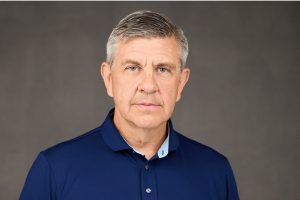 Andrew CavenaghChairman & CEOParetoHealth
 Andrew ClaytonVice ChairmanParetoHealth
Andrew CavenaghChairman & CEOParetoHealthAndrew ClaytonVice ChairmanParetoHealthEpisodes
Subscribe to the only insurance podcast that takes no prisoners
